
BOSNIA AND HERZEGOVINA
BOSNIA AND HERZEGOVINA

NATO Unconditionally Accredited Education and Training Facility

Education and Training Facility with UN Certified Courses

Associated Network Partner of the ESDC Network
NATO Unconditionally Accredited Education and Training Facility
Education and Training Facility with UN Certified Courses
Associated Network Partner of the ESDC Network
10 OCT 2014
Send documents on email
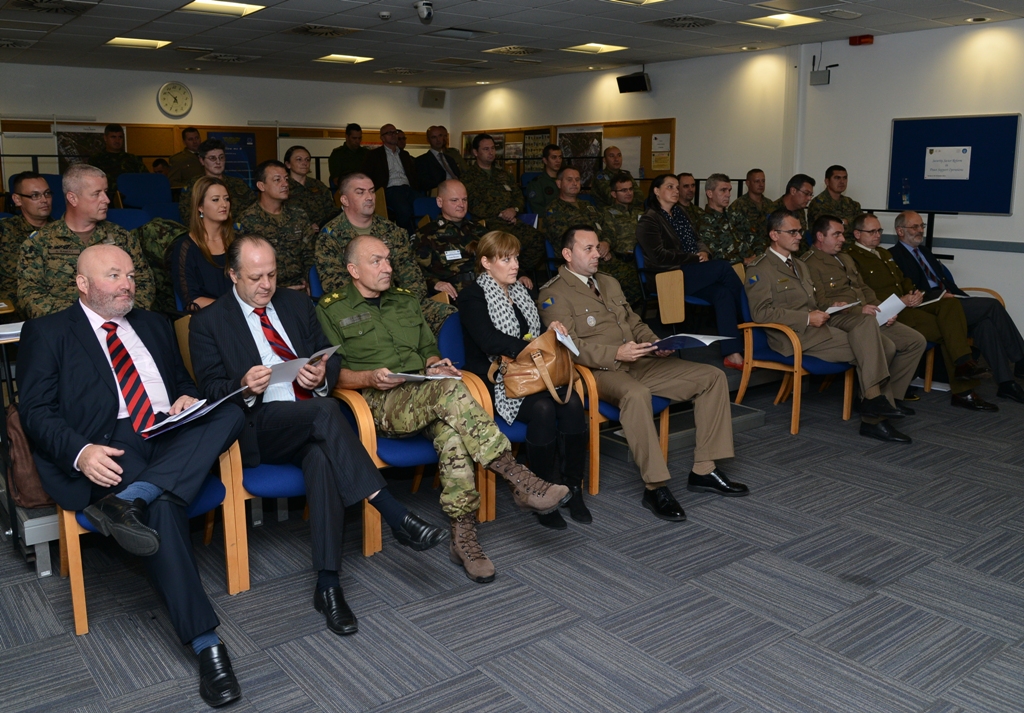
SSR in PSO Course has been conducted for the last five days, from 6th to 10th October 2014 by PSOTC in support of DCAF/ISSAT, OSCE BiH, NATO HQ Sa, CSS, Agency for the Prevention of Corruption and Coordination of the Fight against Corruption, and Ministry of Security BiH. The course was concluded with a closing ceremony which was magnified by presence of the Deputy Head of OSCE BiH Mission, Ms. Nina Suomalainen, the Royal Danish Army Division Cmdr, MG Michael A Lollesgaard, the CSS Director, Mr. Denis Hadžović, the Head of Department for Security Co-operation at OSCE BiH, Mr. John Martin, and DCAF/ISSAT representative, Mr. Dennis Blease. In their speeches, the PSOTC Cmdt, the Deputy Head of OSCE BiH Mission, and the CSS Director emphasized importance of security sector reform in PSO and the role of PSOTC in the SSR in PSO Course as regional project. 20 participants from different countries, agencies and organizations attended the course - 12 participants from AF BiH, 1 from MoS BiH, 1 from Turkey, 1 from Serbia, 1 from Macedonia, 1 from EUFOR, 1 from NATO HQ Sa, 1 from CSS, and 1 from OSCE. SSR Course was established as a project between Swiss government and PSOTC as a three phase initiative: Phase I – Introductory Training on Peace Support Operations and SSR with the main goal to build SSR knowledge within the framework of peace support operations (PSO) in PSOTC (2012);Phase II – Providing PSOTC instructors’ practical experience in designing and delivering SSR trainings (2013/2014); Phase III: PSOTC preparation, funding, and delivery of its own SSR courses independently (2015 and beyond). The course aims to build SSR knowledge and skills through an interactive and practical training approach, in order to achieve following learning objectives: Define the notion of security, security sector and security sector reform; Describe the approach, objectives and dimensions of SSR; Describe post-conflict context and the main SSR challenges; Describe the problems of the defense sector and what defense reform typically involves; Discuss gender perspectives and related processes in a SSR context; Identify key actors involved – at different levels – in SSR processes; Discuss coordination mechanisms for support to SSR processes.
© 2026. Peace Support Operations Training Centre.
WEB PORTAL

AVAILABLE IN ALL RESOLUTIONS

